 GarageCalc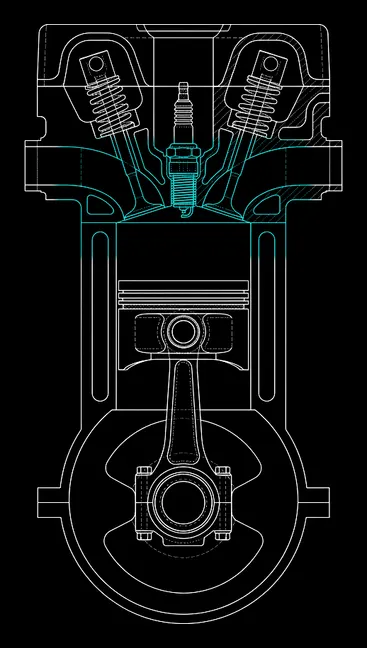
How static compression ratio is calculated
CR = (swept volume + clearance volume) / clearance volume, per cylinder. Swept volume comes from bore and stroke; clearance volume is everything above the piston at top dead center: combustion chamber, head gasket bore volume, deck clearance volume, and the piston's dome (subtracts) or dish/valve reliefs (add). Small errors in chamber or piston volume move the result noticeably, which is why serious builders measure rather than trust catalogs.
Using it for planning
The most common questions this answers: what happens to CR if I mill the heads (smaller chamber), run a thicker gasket, or switch to dished pistons. Change one input at a time and watch the ratio move. Building for boost or E85, aim the static ratio at the fuel first, then pick parts to hit it.
Frequently asked questions
What is a good compression ratio?
For pump-gas naturally aspirated engines: 9.5:1 to 11.5:1 on 91-93 octane, with modern direct-injection engines pushing 12:1 and beyond. Boosted engines typically run 8.5:1 to 10.5:1 static compression to leave room for boost. E85 tolerates roughly a point more than premium gas.
Which measurements do I need for an exact result?
Bore, stroke, combustion chamber volume (cc), head gasket bore and compressed thickness, deck clearance, and the piston dome or dish volume. Chamber volume is the one most people estimate: for a serious build, cc the heads rather than trusting catalog numbers.
What is the difference between static and dynamic compression?
Static compression (what this calculator gives) is pure geometry. Dynamic compression accounts for the intake valve closing point of your camshaft, which determines how much cylinder pressure the engine actually builds. Two engines with identical static CR can have very different dynamic CR with different cams.
Does a thicker head gasket lower compression?
Yes. A thicker compressed gasket adds clearance volume, lowering the ratio slightly: a common trick to take half a point out of a boosted build. The calculator shows the effect instantly if you change only the gasket thickness.